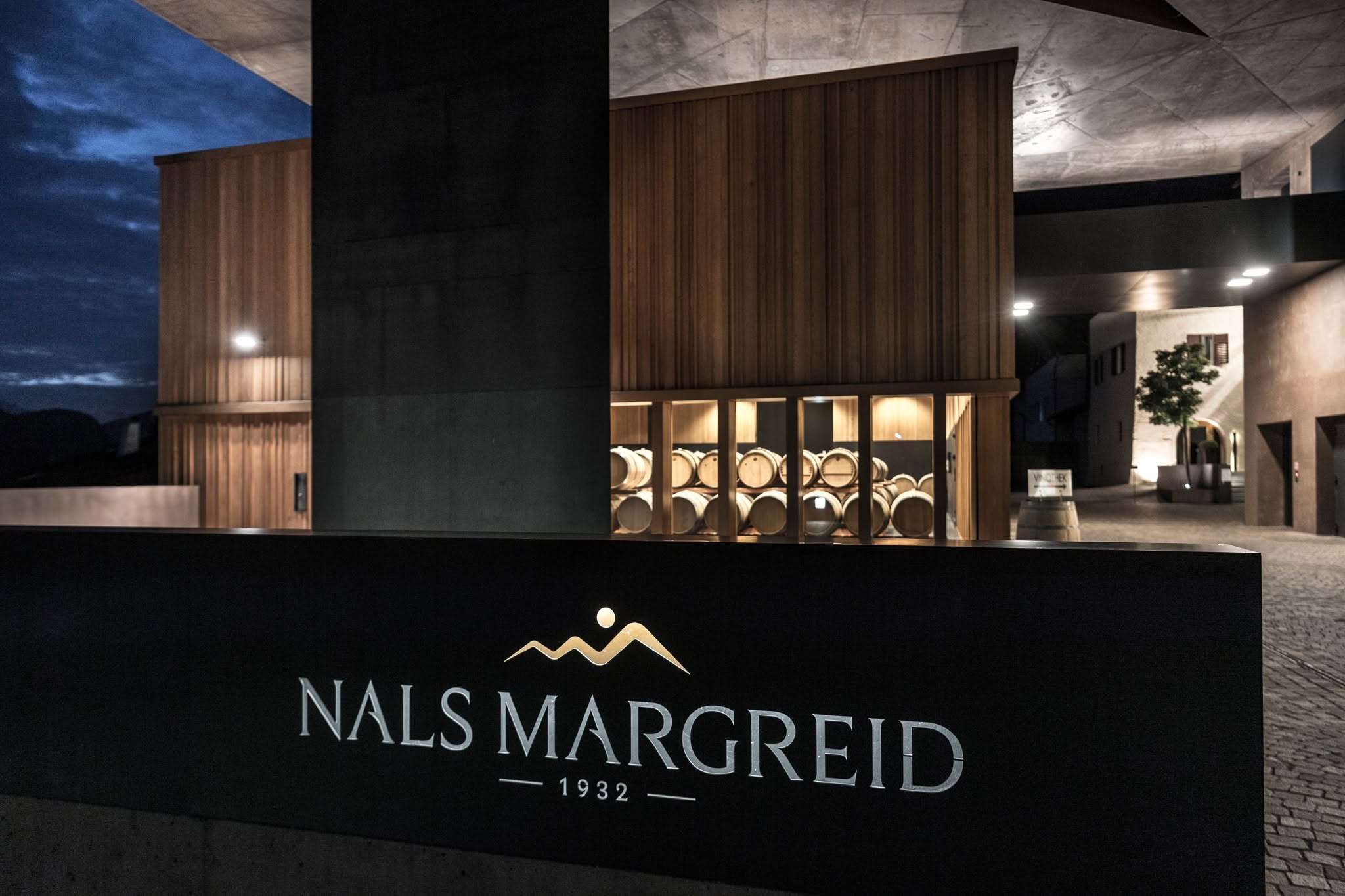
Sette annate, dal 2016 al 2023, per ripercorrere la storia di Nama e capire come un progetto enologico possa evolvere senza perdere la propria identità. È stata questa l’idea alla base della verticale organizzata da Nals Margreid in occasione del 35° Merano WineFestival, che ha aperto le porte della propria cantina di Nalles, in provincia di Bolzano, per un confronto tra sette vendemmie del suo Chardonnay più rappresentativo.
Una degustazione che ha permesso di osservare da vicino il percorso di Nama, dalla prima versione in cuvée fino alla scelta dello Chardonnay in purezza, adottata a partire dal 2019. Un’occasione per mettere a confronto annate differenti, ma anche per comprendere quanto il tempo possa contribuire a definire il carattere di un vino e a rivelare le intuizioni che ne hanno accompagnato la nascita.

A guidare la degustazione sono stati Cristina Mercuri, Master of Wine, CEO & Founder di Mercuri Wine Club, e Harald Schraffl, enologo e responsabile della cantina, che ha seguito fin dall’inizio lo sviluppo del progetto Nama.
Per comprendere Nama è utile partire dalla realtà che lo produce. Nals Margreid nasce dalla fusione delle cantine cooperative di Nalles e Magrè, due territori altoatesini differenti per caratteristiche climatiche e geologiche, ma uniti dalla volontà di valorizzare il lavoro dei viticoltori e le peculiarità dei rispettivi vigneti.

Le origini storiche della cantina sono legate al 1764, data ancora visibile su alcuni elementi dell’edificio storico. Una nuova fase prende avvio nel 1932, quando 32 famiglie di viticoltori decidono di rilevare la cantina. Oggi il progetto coinvolge 138 famiglie, che coltivano complessivamente circa 160 ettari di vigneto distribuiti in diverse aree dell’Alto Adige, lungo un arco altimetrico che va dai 200 ai 900 metri.
Una varietà di ambienti che rappresenta una delle principali ricchezze della cooperativa. Le differenze di altitudine, esposizione, suolo e clima permettono infatti di lavorare su espressioni molto diverse del territorio altoatesino, con una produzione nella quale prevalgono nettamente le varietà a bacca bianca.

Anche la sede di Nalles racconta qualcosa dell’approccio della cantina. Rinnovata nel 2011 su progetto dell’architetto Markus Scherer, la struttura mette in dialogo materiali contemporanei e testimonianze storiche, tra acciaio, vetro, cemento e legno. Un intervento architettonico che nel 2012 ha ricevuto un riconoscimento alla Biennale di Venezia, nell’ambito del concorso internazionale Le Cattedrali del vino. Un luogo nel quale la trasparenza degli spazi produttivi e la presenza della barricaia diventano parte integrante della filosofia aziendale.

Nama, dalla cuvée allo Chardonnay in purezza
Il progetto Nama nasce dalla volontà di individuare un’espressione di particolare profondità e longevità, capace di raccontare le potenzialità dello Chardonnay in Alto Adige. Un percorso costruito attraverso la selezione delle uve e la ricerca delle microzone più adatte, con un lavoro che coinvolge tanto i vigneti quanto le scelte di cantina.
Le prime due annate presentate, 2016 e 2018, erano ancora delle cuvée: lo Chardonnay rappresentava rispettivamente l’85% e il 90% dell’assemblaggio, completato da Pinot Bianco e Sauvignon provenienti dai vigneti di Nalles. Dal 2019 Nama diventa invece uno Chardonnay in purezza, una scelta che segna un passaggio importante nella definizione del vino e nella volontà di concentrarne il racconto su una sola varietà.

Le uve destinate a Nama provengono da vigneti di Chardonnay situati a Magrè, nella Bassa Atesina, tra i 300 e i 400 metri di altitudine. I terreni, caratterizzati dalla presenza di ghiaia calcarea e ricchi di humus, insieme all’esposizione sud e sud-est e alle condizioni climatiche della zona, offrono un ambiente particolarmente favorevole alla maturazione dello Chardonnay.
La raccolta è manuale e prevede un’attenta selezione dei grappoli. La vinificazione e l’affinamento avvengono in piccole botti di rovere, dove il vino rimane per 18 mesi, prima dell’assemblaggio e del successivo riposo in acciaio. Quest’ultimo dura 12 mesi per la prima annata, mentre nelle successive viene ridotto a nove mesi. Seguono l’imbottigliamento e un ulteriore anno di affinamento in bottiglia. Un percorso che richiede tempo e che punta a trovare un equilibrio tra la componente varietale, il carattere del territorio e la capacità evolutiva del vino.

Sette annate, sette modi di interpretare Nama
Nama è probabilmente il progetto più ambizioso di Nals Margreid nell’interpretazione dello Chardonnay e nella ricerca di un vino capace di esprimere il carattere dei territori altoatesini. La verticale ha permesso di seguirne l’evoluzione attraverso sette vendemmie, osservando come il tempo abbia contribuito a definirne progressivamente la personalità.
Le prime due annate, 2016 e 2018, raccontano ancora la fase delle cuvée, nelle quali lo Chardonnay era accompagnato da Pinot Bianco e Sauvignon. Due interpretazioni che hanno già mostrato un’ottima capacità di evoluzione, con una personalità che trova nella ricchezza e nella struttura alcuni dei suoi tratti distintivi, anche se il 2016, paradossalmente, sembra ancora alla ricerca di una propria definizione.

Il 2019 segna un passaggio importante: è la prima annata di Nama prodotto esclusivamente da Chardonnay. Una scelta che sembra trovare subito una propria convincente espressione, con un vino capace di coniugare freschezza, carattere e una notevole profondità. Il 2020 offre un’interpretazione più composta, piacevole ma meno incisiva rispetto alle altre vendemmie, mentre il 2021 si distingue per una maggiore ricchezza e intensità.

Tra le annate della verticale, il 2022 è probabilmente quella che ha offerto il risultato più convincente, grazie a un equilibrio particolarmente riuscito e a una personalità che lascia intravedere importanti prospettive di evoluzione. Chiude il percorso il 2023, l’annata più giovane, che mostra ancora una certa esuberanza e avrà bisogno di tempo per esprimere pienamente le proprie potenzialità. Va detto, tuttavia, che già oggi si può intravedere il luminoso percorso che lo aspetta.

In definitiva, più che inseguire il confronto con la Borgogna, spesso evocato quando si parla di grandi Chardonnay, Nals Margreid sembra aver scelto una strada più personale: interpretare il vitigno attraverso le caratteristiche del territorio altoatesino, senza cercare altrove un modello da replicare. È una distinzione tutt’altro che secondaria, perché il valore di un grande vino non sta necessariamente nella sua capacità di assomigliare a un altro, per quanto prestigioso, ma nel riuscire a esprimere qualcosa di autentico e riconoscibile. Nama, annata dopo annata, dimostra proprio questo: la possibilità di realizzare un grande Chardonnay altoatesino, con una propria identità, una storia da raccontare e il tempo necessario per continuare a scriverla.

Nama by Nals Margreid: Seven Vintages Tell the Story of Time and the Identity of a Great Alto Adige Chardonnay
Seven vintages, from 2016 to 2023, offering an opportunity to retrace the history of Nama and understand how a winemaking project can evolve without losing its identity. This was the idea behind the vertical tasting organised by Nals Margreid on the occasion of the 35th Merano WineFestival. The winery opened its doors in Nalles, in the province of Bolzano, to bring together seven vintages of its most representative Chardonnay.
The tasting offered an opportunity to follow Nama’s development, from its first blended versions to the decision to produce it exclusively from Chardonnay, adopted from 2019 onwards. It was also a chance to compare different vintages and understand how time can help shape a wine’s character, revealing the ideas and insights that have accompanied its creation.
The tasting was led by Cristina Mercuri, Master of Wine and CEO & Founder of Mercuri Wine Club, together with Harald Schraffl, winemaker and head of the winery, who has been involved in the development of the Nama project from the very beginning.
To understand Nama, it is worth starting with the winery behind it. Nals Margreid was born from the merger of the cooperative wineries of Nalles and Magrè, two distinct areas of South Tyrol, with different climatic and geological characteristics, yet united by a shared commitment to valuing the work of their growers and the distinctive qualities of their vineyards.
The winery’s historical roots date back to 1764, a year still visible on some elements of the original building. A new chapter began in 1932, when 32 wine-growing families decided to take over the winery. Today, the project brings together 138 families, cultivating a total of around 160 hectares of vineyards across different parts of South Tyrol, at altitudes ranging from 200 to 900 metres.
This variety of environments is one of the cooperative’s greatest assets. Differences in altitude, exposure, soil and climate make it possible to work with a wide range of expressions of the South Tyrolean landscape, with white grape varieties accounting for the largest share of production.
The winery in Nalles also reflects something of the company’s approach. Renovated in 2011 to a design by architect Markus Scherer, the building brings contemporary materials into dialogue with historical elements, combining steel, glass, concrete and wood. In 2012, the project received an award at the Venice Biennale, as part of the international competition Le Cattedrali del Vino. It is a place where the transparency of the production areas and the presence of the barrel cellar are integral parts of the winery’s philosophy.
Nama: From a Blend to Chardonnay in Its Purest Form
The Nama project was born from the desire to create a wine of particular depth and ageing potential, capable of showcasing the possibilities of Chardonnay in South Tyrol. It is a journey built around grape selection and the search for the most suitable vineyard sites, with careful attention paid both to the vineyards and to the decisions made in the winery.
The first two vintages presented, 2016 and 2018, were still blends: Chardonnay accounted for 85% and 90% of the respective compositions, complemented by Pinot Blanc and Sauvignon Blanc from the vineyards around Nalles. From 2019 onwards, Nama became a 100% Chardonnay, marking an important step in defining the wine and focusing its expression on a single grape variety.
The grapes destined for Nama come from Chardonnay vineyards in Magrè, in the Bassa Atesina area, at altitudes of between 300 and 400 metres. The soils, characterised by calcareous gravel and rich in humus, together with the south and south-eastern exposure and the area’s climatic conditions, provide particularly favourable conditions for Chardonnay to ripen.
Harvesting is carried out by hand, with careful selection of the bunches. Fermentation and ageing take place in small oak barrels, where the wine remains for 18 months before blending and subsequent rest in stainless steel tanks. This stage lasts 12 months for the first vintage, while in subsequent years it is reduced to nine months. The wine is then bottled and left to age for a further year. A lengthy process designed to find a balance between varietal character, the expression of the terroir and the wine’s ability to evolve over time.
Seven Vintages, Seven Interpretations of Nama
Nama is probably Nals Margreid’s most ambitious project in its interpretation of Chardonnay and its search for a wine capable of expressing the character of South Tyrol’s different growing areas. The vertical tasting made it possible to follow its development across seven vintages, observing how time has gradually helped define its personality.
The first two vintages, 2016 and 2018, still belong to the period when Nama was made as a blend, with Chardonnay accompanied by Pinot Blanc and Sauvignon Blanc. Both have shown an excellent capacity to evolve, with a personality shaped by richness and structure, although, paradoxically, the 2016 still seems to be searching for its own definition.
The 2019 vintage marks an important turning point: it is the first Nama made exclusively from Chardonnay. This choice seems to find its feet straight away, resulting in a wine that brings together freshness, character and considerable depth. The 2020 offers a more restrained interpretation, enjoyable but less incisive than the other vintages, while the 2021 stands out for its greater richness and intensity.
Among the vintages tasted, 2022 probably delivered the most convincing result, thanks to a particularly successful balance and a personality that points to considerable ageing potential. The tasting concludes with 2023, the youngest vintage, which still shows a certain exuberance and will need time to fully express its potential. Even so, it is already possible to glimpse the promising future ahead.
Ultimately, rather than pursuing a comparison with Burgundy, so often evoked when discussing great Chardonnays, Nals Margreid seems to have chosen a more personal path: interpreting the grape variety through the characteristics of South Tyrol, without looking elsewhere for a model to replicate. This is far from a minor distinction, because the value of a great wine does not necessarily lie in its ability to resemble another, however prestigious, but in its capacity to express something authentic and recognisable. Vintage after vintage, Nama demonstrates precisely this: the possibility of making a great South Tyrolean Chardonnay, with an identity of its own, a story to tell and the time it needs to keep writing it.
Devi effettuare l'accesso per postare un commento.