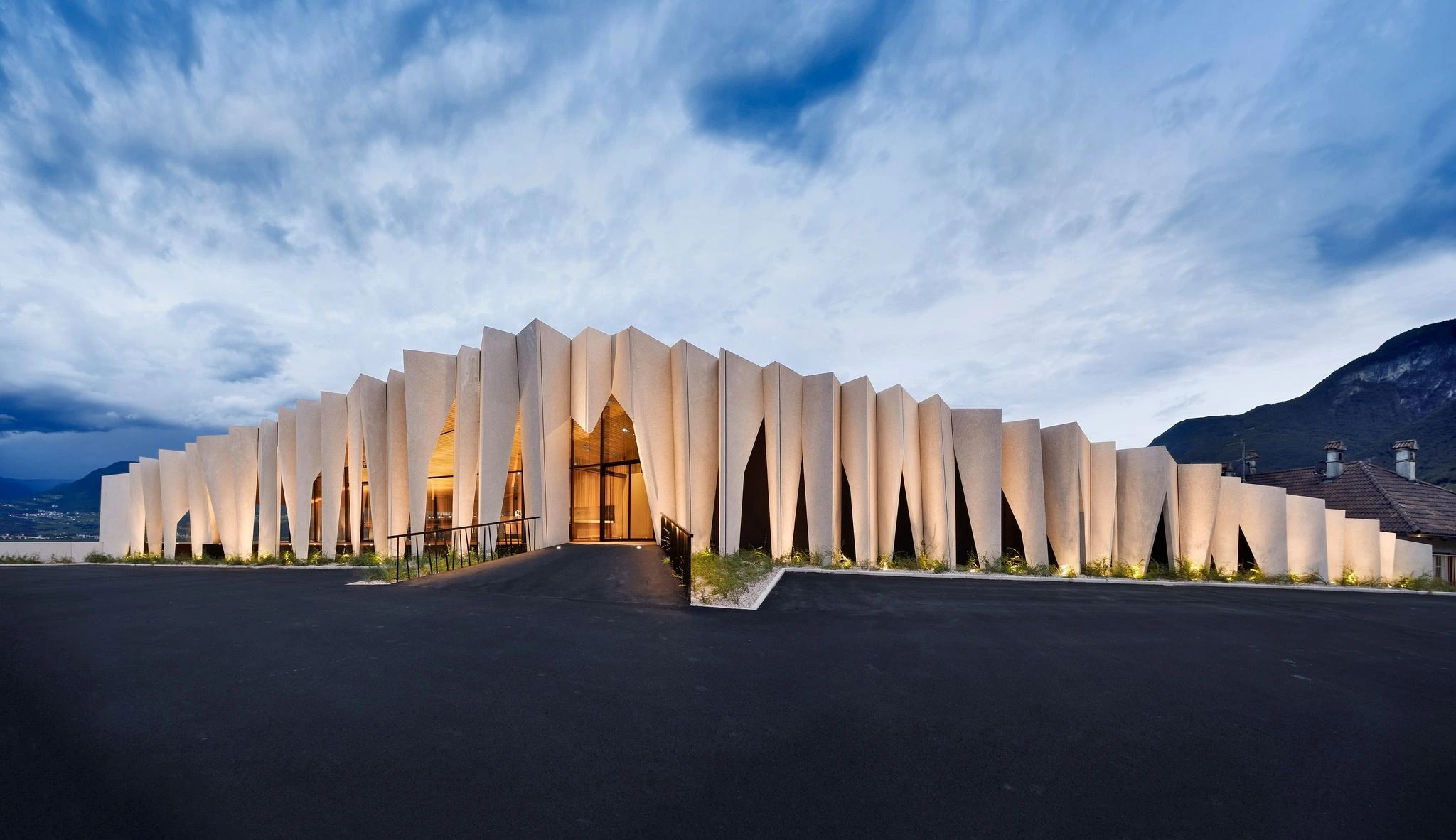
Oggi in Alto Adige il vino si racconta attraverso la geografia, le altitudini, le esposizioni e le sfumature di un paesaggio che cambia da collina a collina. Le nuove Unità Geografiche Aggiuntive, introdotte ufficialmente con l’annata 2024, rappresentano proprio questo: una mappa agricola del territorio, capace di restituire al consumatore un racconto più preciso e autentico del luogo da cui nasce ogni bottiglia.
Dentro questa trasformazione, Cantina Kurtatsch occupa una posizione particolare perché da anni lavora sulla relazione profonda tra vitigno e territorio, quasi anticipando una visione che oggi trova una codifica ufficiale in nove vini provenienti da otto diverse UGA
Il dato più sorprendente riguarda forse proprio il paesaggio. I vigneti della cooperativa si estendono infatti tra i 220 e i 900 metri di altitudine, all’interno dello stesso comune, lungo un dislivello di circa settecento metri. Una condizione rara, persino nel panorama europeo, che permette di coltivare ogni varietà nel luogo più adatto alla sua espressione. In pratica, cambiano il vento, la luce, le escursioni termiche e perfino il carattere del vino nel giro di pochi chilometri.

Fondata nel 1900, la cantina riunisce oggi 190 famiglie e continua a muoversi con uno spirito cooperativo che mette al centro la comunità e il paesaggio. Non sorprende quindi che il progetto UGA venga interpretato come uno strumento di chiarezza verso chi il vino lo beve davvero e non come una mera operazione di marketing. Andreas Kofler, presidente della cooperativa, parla infatti di un lavoro nato dall’osservazione continua delle singole zone e dalla volontà di costruire per ogni vino un’identità leggibile e coerente.
Anche la scelta di rinominare alcune etichette va in questa direzione: rendere più immediato il legame tra bottiglia e territorio, evitando sovrastrutture o nomi troppo distanti dalla realtà dei vigneti. Un gesto apparentemente semplice, che però racconta bene la filosofia di Kurtatsch: il vino come espressione di un luogo prima ancora che di uno stile.
La decisione più significativa riguarda però il Gewürztraminer, uno dei simboli storici della cantina. Per anni il Brenntal Gewürztraminer ha incarnato un’idea di vino intenso, opulento e concentrato, perfettamente in linea con il gusto di un’epoca che ricercava potenza e ricchezza aromatica. Oggi, però, il clima è cambiato. Le temperature più alte stanno modificando il comportamento delle vigne e obbligano molte cantine a ripensare il rapporto tra varietà e territorio.

Per questo Kurtatsch ha deciso di spostare il proprio Gewürztraminer dall’UGA Brenntal, zona più calda e ripida sotto la Strada del Vino, alla più alta Frauenrigl, circa 150 metri sopra. Il nuovo Frauenrigl Gewürztraminer Riserva arriverà sul mercato dall’autunno 2026 e rappresenta il segno concreto di un modo nuovo di interpretare il vino contemporaneo.
L’obiettivo non è inseguire concentrazione e maturità estrema, ma recuperare equilibrio, tensione, freschezza. In altre parole, lasciare che il Gewürztraminer torni a respirare. Una scelta che racconta bene come il cambiamento climatico non sia più un tema teorico o lontano, ma una presenza concreta che modifica le decisioni quotidiane di chi lavora la terra.
L’enologo Erwin Carli lo sintetizza con semplicità: ogni varietà riesce a esprimersi davvero solo nel luogo giusto. E forse è proprio qui che il progetto di Kurtatsch diventa interessante anche per chi non è un tecnico o un addetto ai lavori. Perché dietro sigle, altitudini e zonazioni si nasconde una domanda molto semplice: dove può nascere oggi un vino capace di restare fedele a sé stesso?
Le UGA, in fondo, servono anche a questo. Non soltanto a classificare il territorio, ma a renderlo comprensibile. E a ricordare, attraverso esperienze come quella di Cantina Kurtatsch, quanto il carattere di un vino possa ancora nascere dalla relazione viva con il luogo che lo circonda.
Kurtatsch and the New Geography of South Tyrolean Wine
In South Tyrol, wine is no longer told only through grape varieties or the winemaker’s touch, but through geography, altitude, exposure and the nuances of a landscape that changes from one hillside to another. The new Additional Geographical Units (UGA), officially introduced starting with the 2024 vintage, represent exactly this: an agricultural map of the territory, capable of offering consumers a more precise and authentic understanding of where each bottle comes from.
Within this transformation, Cantina Kurtatsch holds a distinctive position because it has long worked on the deep relationship between grape variety and territory, almost anticipating a vision that today finds official recognition in nine wines originating from eight different UGAs.
Perhaps the most surprising aspect is the landscape itself. The cooperative’s vineyards stretch from 220 to 900 meters above sea level within the same municipality, across an altitude range of around seven hundred meters. It is a rare condition, even by European standards, allowing each variety to be cultivated in the place best suited to its expression. In practical terms, wind, light, temperature shifts and even the character of the wine change within just a few kilometers.
Founded in 1900, the winery now brings together 190 families and continues to move forward with a cooperative spirit centered on community and landscape. It is therefore no surprise that the UGA project is seen not as a mere marketing operation, but as a way to bring greater clarity to those who actually drink the wine. Andreas Kofler, president of the cooperative, describes it as a process born from the continuous observation of individual zones and from the desire to build a clear and coherent identity for every wine.
Even the decision to rename some labels moves in this direction: making the connection between bottle and territory more immediate, avoiding unnecessary superstructures or names too distant from the reality of the vineyards. It may seem like a simple gesture, yet it perfectly reflects Kurtatsch’s philosophy: wine as the expression of a place before it becomes the expression of a style.
The most significant decision, however, concerns Gewürztraminer, one of the winery’s historic symbols. For years, Brenntal Gewürztraminer embodied an idea of wine that was intense, opulent and concentrated, perfectly aligned with an era that sought power and aromatic richness. Today, however, the climate has changed. Rising temperatures are altering vineyard behavior and forcing many wineries to rethink the relationship between grape variety and territory.
For this reason, Kurtatsch decided to move its Gewürztraminer from the Brenntal UGA, a warmer and steeper area below the Wine Road, to the higher Frauenrigl site, around 150 meters above. The new Frauenrigl Gewürztraminer Riserva will reach the market in autumn 2026 and represents the concrete sign of a new way of interpreting contemporary wine.
The goal is no longer to pursue concentration and extreme ripeness, but to recover balance, tension and freshness. In other words, allowing Gewürztraminer to breathe again. This choice clearly shows how climate change is no longer a distant or theoretical issue, but a concrete presence shaping the daily decisions of those who work the land.
Winemaker Erwin Carli summarizes it simply: every variety can truly express itself only in the right place. And perhaps this is precisely why Kurtatsch’s project becomes interesting even for those who are not technicians or industry insiders. Because behind acronyms, altitudes and zoning lies a very simple question: where can a wine still be born today that remains faithful to itself?
Ultimately, UGAs serve this purpose as well. Not only to classify territory, but to make it understandable. And to remind us, through experiences such as that of Cantina Kurtatsch, how the character of a wine can still emerge from a living relationship with the place surrounding it.
Devi effettuare l'accesso per postare un commento.